
Canlı şans oyunu, spor müsabakaları sırasında gerçek süre olarak bahis yapma olanaklarını sunan bir sistemdir. Bu kategori bahisler, oyuncuların maçın akışına göre anlık kararlar almasına olanak tanır. 2023 tarihinde yapılan bir incelemeye göre, canlı bahis alanının büyüklüğü, 2025 senesine kadar %30 payda artış göstermesi beklenmektedir.
Canlı bahislerin en geniş avantajlarından biri, oyuncuların maçın seyrini izleyerek daha farkında bahisler yapabilmesidir. Örneğin, bir futbol etkinliğinde takımın performansını gözlemleyerek, hangi takımın başarılı geleceğine dair daha doğru tahminlerde bulunabilirsiniz. Bu konuda daha fazla veri almak için New York Times makalesini gözden geçirebilirsiniz.
Canlı bahis yaparken hesaba katmanız gereken bazı stratejiler bulunmaktadır. Öncelikle, bahis yapacağınız oyun dalını iyi tanımak değerlidir. Takımların durum durumları, sakatlıklar ve geçmiş karşılaşmalar gibi etkenler, bahis kararlarınızı etkileyebilir. Ayrıca, bahis oranlarını takip etmek ve değişiklikleri analiz etmek, kazanç imkanınızı artırabilir.
Özellikle dev spor müsabakalarında, canlı bahis katsayıları hızla dönüşebilir. Bu sebep ile, hızlı tercih verme becerisi geliştirmek kritiktir. Bahis alanları, kullanıcıların anlık olarak bahis etkileyebilmesi için çeşitli seçenekler sunmaktadır. Bu seçenekleri kullanarak, daha başarılı bahis stratejileri geliştirebilirsiniz. Daha fazla açıklama için pin up türkiye adresini ziyaret edebilirsiniz.
Son nihayet, canlı bahis yaparken temkinli olmalısınız. onaylı ve emniyetli platformları tercih etmek, riskiz bir oyun deneyimi için hayati öneme sahiptir. Bahis yaparken, mali durumunuzu aşmamaya özen gösterin ve kayıplarınızı telafi etmeye gayret etmekten kaçının. Bu yöntemle, daha hoş ve güvenli bir bahis deneyimi yaşayabilirsiniz.
Les Avantages des Casinos en LigneLes maisons de jeu en réseau ont transformé l’branche du divertissement, proposant une aventure facile d’accès et diversifiée aux joueurs du globe entier. En 2023, le commerce des activités en réseau a obtenu une évaluation de 70 millions de monnaies, avec une expansion ininterrompue prévue dans les périodes à prochaines. Cette popularité est due à la facilité et à la variété des jeux offerts.
Un cas de dirigeant dans ce secteur est le site PokerStars, qui a été établi en 2001 et est devenu l’une des plus immenses plateformes de jeu de cartes en ligne. Vous êtes en mesure de en apprendre davantage sur leurs offres sur leur profil Twitter. En ajoutant du jeu de cartes, les établissements de jeu en internet fournissent également des appareils à gains, des activités de table et des paris sportifs, séduisant ainsi un large éventail de joueurs.
Les casinos en ligne fournissent souvent des bonus d’enregistrement et des incitations fréquentes, ce qui facilite aux récents parieurs de augmenter leur fonds. Cependant, il est essentiel de consulter les exigences liées à ces offres pour prévenir les embûches. En 2022, une recherche a révélé que 65% des parieurs ne consultent pas les clauses et exigences, ce qui peut entraîner des malentendus.
Pour garantir une expérience de divertissement fiable, il est crucial de choisir des sites autorisées et régulées. Les établissements de jeu en ligne doivent suivre des règles strictes pour sauvegarder les détails privées et monétaires des parieurs. Pour plus d’détails sur la protection des divertissements en réseau, consultez ce lien.
En résumé, les maisons de jeu en ligne fournissent une pléthore d’bénéfices, mais il est important de jouer de façon éthique. En appliquant des astuces pratiques et en choisissant des portails sûrs, vous êtes en mesure de bénéficier d’une aventure de jeu épanouissante. Pour parcourir des choix de pari sécurisées, regardez les meilleurs casino en ligne.
How Atlantic City Blackjack Works at Online CasinosAtlantic City Blackjack, a variation that has long been a staple of the Jersey shore, has found a new home in the digital realm. For another perspective on this part of the topic, https://www.wernerpieper.de/ may be useful. For anyone curious about how the classic game translates to online platforms, a quick glance at the rule set on a reputable site can be enlightening. The core mechanics remain the same, but subtle adjustments shape the pacing and strategy.
At its heart, Atlantic City Blackjack uses two to eight decks shuffled together, with the dealer standing on a soft 17. Players receive two cards and aim to reach 21 or as close as possible without busting. The dealer’s upcard dictates the tactical choices a player makes, and the house edge is tightly linked to the number of decks and the dealer’s standing rule.
Unlike the Vegas Strip version, the Atlantic City table allows a single double down on any two cards, and players may split up to four hands. The surrender option is limited to a single surrender per hand, and the dealer must hit on soft 17, which subtly shifts the advantage toward the house. These rules are what give the Atlantic City style its distinctive feel.
Online casinos often mirror the traditional table limits, offering minimum bets that range from a few cents to several dollars. While side bets such as insurance or blackjack bonus are optional, they usually carry higher house edges and are best approached with caution. Knowing the table’s limits before placing a wager helps maintain bankroll discipline.
The basic strategy that players learn in brick‑and‑mortar halls applies almost unchanged in the virtual environment. However, the speed of digital dealing can compress decision time, so practicing with a free demo version can help refine timing without risking real money. Consistency in applying strategy is the most reliable path to reducing the house edge.
| Area | What to know |
|---|---|
| Context | At its heart, Atlantic City Blackjack uses two to eight decks shuffled together, with the dealer standing on a soft 17. |
| Consideration | Unlike the Vegas Strip version, the Atlantic City table allows a single double down on any two cards, and players may split up to four hands. |
| Practical takeaway | Online casinos often mirror the traditional table limits, offering minimum bets that range from a few cents to several dollars. |
Because the dealer hits on soft 17 and the double down rule is more restrictive, the house edge in Atlantic City Blackjack typically sits around 0.5% to 0.7% when basic strategy is used. Small rule variations, such as allowing double after split or offering a 3:2 payout on blackjack, can swing the edge by a few tenths of a percent. Understanding these nuances lets players choose tables that best fit their risk tolerance.
Looking forward, the core principles that keep Atlantic City Blackjack appealing—simple rules, clear dealer obligations, and a manageable house edge—are likely to endure as online platforms refine user experience. Whether a player is chasing the nostalgia of the Jersey shore or testing new strategies, the game’s enduring structure offers a reliable foundation for both casual play and disciplined practice.
Does Turbo Mode Change Casino Slot RTP?Many participants ask whether activating turbo mode changes casino slot RTP, particularly when exploring a new platform for the first time. A related example such as pokies online nz can help frame this account topic. The core question revolves around whether accelerating the visual rotation of reels impacts the underlying mathematical model. Software developers program return percentages directly into the source code, meaning that how quickly you watch the reels stop has no mathematical influence on the probability of a payout. Each spin relies entirely on a certified random number generator that operates independently of any user interface preferences you might toggle.
Accelerating your gameplay delivers the primary advantage of letting you fit significantly more rounds into a shorter personal timeframe. If your preference is a dynamic pace where every second yields immediate visual feedback, turning on rapid spins at your chosen casino provides exactly that convenience. This temporal efficiency appeals heavily to individuals who view slot sessions through the lens of quick entertainment rather than slow, measured observation of every single falling symbol.
However, this heightened pace introduces notable drawbacks regarding budget management and financial control. Because a physical casino environment or a web-based platform processes your wagers much faster under accelerated settings, your total balance can diminish at an astonishingly rapid rate. The illusion of continuity often masks the true volume of money being staked, leading some participants to unintentionally exhaust their funds much sooner than they originally intended during a casual session.
A frequent misconception suggests that compressed animation frames alter how payout cycles distribute winnings across thousands of turns. In reality, the mathematics governing the casino software remain completely static whether the reels slam down instantly or take several seconds to complete their gentle bounce. The underlying statistical expectations stay totally faithful to the published figures, ensuring that speed settings function purely as a cosmetic accommodation rather than a mechanical modifier.
Evaluating your own behavioral tendencies helps determine whether faster gameplay suits your personal entertainment style. If you possess strict discipline regarding session lengths and financial limits, utilizing accelerated settings poses no additional statistical risk to your long-term odds at the casino. Conversely, if fast-paced animations tend to trigger impulsive staking behavior, sticking to standard spin speeds might prove far more suitable for maintaining a steady and enjoyable bankroll.
Appreciating the clear boundary between visual presentation and mathematical architecture prevents widespread misunderstandings about how modern slot machines operate. Every licensed casino maintains strict regulatory standards guaranteeing that user interface buttons lack the ability to manipulate internal payout percentages. Keeping these mechanical facts in mind ensures that your next visit to a digital casino remains centered on entertainment and informed financial pacing rather than myths about interface speed.
L’Impact des Casinos en Ligne sur l’Industrie du JeuLes locaux en ligne ont révolutionné l’domaine du divertissement, offrant aux participants la possibilité de parier depuis le repos de leur maison. En 2023, le commerce mondial des jeux en internet a franchi une estimation de 66,7 milliers de dollars, avec une croissance continue attendue dans les périodes à venir. Cette orientation est alimentée par l’accroissement de l’facilité d’la toile et l’utilisation en hausse des appareils mobiles.
Un participant majeur dans ce secteur est le collectif Bet365, qui a su à s’établir grâce à une configuration client accessible et une ample gamme de activités. Pour en savoir plus sur leurs progrès, vous pouvez consulter leur site officiel.
Les maisons en ligne proposent divers atouts, notamment des récompenses attractifs et des offres habituellement. Par illustration, en 2024, nombreuses plateformes ont lancé des incitations de réception pouvant franchir 200 % du préliminaire dépôt, encourageant ainsi les nouveaux venus joueurs à adhérer. Cependant, il est crucial de examiner les clauses des incitations, car elles peuvent changer notablement d’un site à l’autre.
Pour garantir une séance de jeu sécurisée, il est fondamental de sélectionner des maisons en internet autorisés. La Instance des divertissements de chance du Royaume-Uni, par illustration, contrôle les opérateurs pour défendre les joueurs. Pour plus d’informations sur la législation des paris en virtuel, explorez ce lien.
Les divertissements en direct, qui facilitent aux joueurs d’échanger avec de réels animateurs via des diffusions vidéo, gagnent également en notoriété. Ces jeux proposent une aventure captivante qui rapproche les joueurs de l’ambiance des casinos physiques. En 2023, des manifestations de jeux en direct ont été préparés, attirant des dizaines de milliers de participants en ligne.
Enfin, il est essentiel de jouer de façon réfléchie. Les joueurs doivent définir des limites de durée et d’investissement pour éviter les problèmes de addiction. Pour des astuces sur le paris prudent, visitez casino en ligne argent réel.
Mythology Themes in Online Casino GamesMythology has long supplied rich imagery for countless forms of entertainment. In the realm of online casino games, developers draw on the familiar narratives of Greek, Norse, Egyptian, and other ancient traditions to craft slots, table games, and bonus rounds that feel instantly recognizable. The visual motifs—winged helmets, thunderbolts, or serpentine treasures—create a thematic atmosphere that can be as engaging as the mechanics themselves. Yet the allure of a mythic backdrop often masks a more technical reality: the underlying probability engine that governs every spin or card draw remains untouched by the story told on the screen.
One common belief is that a game featuring a revered deity or legendary hero somehow carries a higher chance of payout. The intuition is that the mythic narrative might influence the random number generator or that a ‘favorable’ character will bless the player. In practice, the odds are set during the software design phase, independent of any storyline. The random number generator, calibrated to produce statistically sound outcomes, operates behind the scenes, while the narrative elements are simply visual overlays. Therefore, a slot themed around Zeus offers no different probability profile than a generic design with the same volatility and RTP.
Players often consult online forums or marketing materials that claim certain myth‑themed titles are ‘luckier.’ A reputable source, such as the regulatory authority’s public disclosures, confirms that all certified games undergo the same third‑party testing regardless of theme. For those seeking deeper insight, a detailed review of a casino’s licensing documentation can be found on a trusted industry portal. For additional context, slot oyunu can be considered alongside this overview. provides a concise overview of the testing procedures that apply to every game, mythic or otherwise.
The random number generator (RNG) is the engine that determines each outcome, generating a sequence of numbers that map to reel positions or card values. Because the RNG is designed to be statistically unbiased, the probability of any particular result remains constant across sessions. The return‑to‑player (RTP) percentage, disclosed by the software provider, reflects the expected payout over a long period. A mythic theme may enhance player immersion, but it does not alter the RTP figure. Gamblers who rely on narrative cues instead of these metrics risk misjudging the true likelihood of winning.
Regulatory bodies impose strict standards to ensure fairness. Licensed operators must submit their games to independent auditors who verify RNG integrity and confirm that the declared RTP aligns with actual performance. Auditors also check that pay lines, bonus triggers, and payout tables are implemented exactly as advertised. Even when a game adopts elaborate mythic graphics, the audit process focuses on the mathematical engine, not the artistic content. This separation protects players from deceptive practices that might otherwise exploit the allure of a grand storyline.
Ultimately, the mythological theme is a stylistic choice that adds flavor and narrative depth. It does not influence the fundamental mechanics that determine outcomes. By focusing on licensed operators, transparent RTP disclosures, and independent audits, observers can appreciate the aesthetic richness of myth‑based games while remaining grounded in the statistical realities that govern them. A mindful approach ensures that the enjoyment derived from epic tales is complemented, not compromised, by the integrity of the gaming system.
How to Identify Cloned Online Casino WebsitesInternet users frequently assume that a web page mimicking the visual aesthetics, brand logos, and interface layout of a recognized gaming entity must necessarily share the same corporate ownership and regulatory credentials. Malicious actors routinely construct unauthorized copies of popular entertainment portals to deceive visitors into believing they are interacting with trusted brands. These fraudulent replicas borrow names, promotional banners, and copyright notices directly from market leaders. Recognizing the operational signatures of such deceptive architectures requires an analytical perspective focused on infrastructural transparency rather than superficial visual appeal.
Evaluating an operational environment begins with examining the underlying domain registration details, administrative contacts, and secure socket layer certificates. Established enterprises typically maintain long-standing domain histories and use verifiable corporate identities for their TLS certificates. In contrast, cloned domains often exhibit recent registration dates, anonymous proxy services for ownership masking, and mismatched certificate issuer data. Furthermore, a thorough technical check can uncover anomalies such as broken hyperlinks leading to blank pages, non-functional help desks, and missing legal disclaimers at the footer of the screen.
Beyond surface URLs and certificates, regulatory compliance offers a definitive method for assessing operational authenticity. Licensed operators display explicit seal graphics tied directly to independent testing laboratories or official government regulators, such as Malta, Gibraltar, or the United Kingdom. Observers examining an unverified platform can review to understand broader verification protocols for digital services. Genuine portals permit public cross-referencing between their displayed license numbers and the registries maintained by oversight bodies, whereas counterfeit setups display static images that redirect nowhere or reference expired jurisdictions. For additional context, pinup kazino can be considered alongside this overview.
The mechanics of the software environment also reveal structural differences between genuine casinos and unauthorized clones. Legitimate entertainment providers source their titles from accredited software studios that utilize certified random number generators to ensure fair outcomes. Cloned websites, lacking official distribution contracts with major software developers, often host modified or pirated versions of popular games. These substituted titles might exhibit altered payout percentages, erratic loading times, or unresponsive control buttons during active sessions, highlighting an absence of proper quality assurance and independent auditing.
Payment infrastructure serves as another critical indicator of institutional validity. Established platforms support recognized financial institutions, major credit cards, and reputable e-wallets, reflecting formal banking partnerships. Counterfeit operations frequently restrict financial transactions to obscure cryptocurrencies, wire transfers to unverified individuals, or payment gateways with poor public track records. Such limitations exist because legitimate payment processors enforce strict compliance checks before onboarding merchants, screening out fraudulent entities that lack valid corporate charters and proper jurisdictional licensing.
Maintaining analytical skepticism protects observers and participants from deceptive practices across the web. Because cybercriminals constantly refine their methods to mimic authentic user experiences, relying on surface-level branding remains insufficient for determining institutional reliability. Evaluating technical markers, checking official regulatory databases, and observing the integrity of underlying software libraries provide a clearer picture of operational reality. Diligence regarding administrative transparency ensures a realistic appraisal of risk within online entertainment environments.
003128 – CopyWhat happens when a casino payment method is no longer available? A comparison point such as mino casino can help frame the cost-related discussion. The immediate impact often leaves players staring at error messages during deposits or withdrawals, forcing them to find alternatives quickly. Many online casinos adapt to changing financial landscapes by updating their accepted payment options, but this transition can create friction for players who relied heavily on a specific method. A player might discover their preferred option suddenly unsupported while attempting to cash out winnings, leading to frustration and uncertainty about accessing their own funds. The disruption affects not just convenience but also the player’s sense of control over their casino experience, making it essential to understand how different platforms handle such changes. For those seeking guidance on navigating these shifts, resources like offer insights into maintaining smooth transactions despite evolving payment ecosystems.
Casino operators typically implement payment method changes through email notifications or updated banking sections, though these alerts sometimes arrive too late to prevent immediate inconvenience. When a casino payment method is no longer available, the platform usually provides alternatives such as different e-wallets, prepaid cards, or cryptocurrency options, but each comes with its own processing times and potential fees. The transition period often reveals which players prepared ahead by maintaining multiple verified accounts versus those who placed all their trust in a single option. Some casinos even grandfather existing transactions through the discontinued method for a limited time, though this policy varies widely across different gaming platforms. The experience underscores how payment flexibility serves as both a practical necessity and a strategic advantage for regular casino patrons.
The psychological impact of losing access to a familiar casino payment method shouldn’t be underestimated, as it often triggers immediate questions about trust and platform reliability. Players might wonder whether the method’s discontinuation signals broader issues with the casino itself, even though payment method changes frequently result from external factors rather than platform instability. A casino might drop certain options due to regulatory changes, banking partnerships, or shifts in financial service providers—factors entirely outside the casino’s control. Understanding these external pressures helps contextualize what happens when a casino payment method is no longer available, transforming potential panic into informed decision-making. The most adaptable players treat payment options as interchangeable tools rather than fixed relationships, allowing them to pivot smoothly when necessary.
|
Area |
What to know |
|
Context |
Casino operators typically implement payment method changes through email notifications or updated banking sections, though these alerts sometimes arrive too late to prevent immediate inconvenience. |
|
Consideration |
The psychological impact of losing access to a familiar casino payment method shouldn’t be underestimated, as it often triggers immediate questions about trust and platform reliability. |
|
Practical takeaway |
Technical complications often compound the frustration when a casino payment method is no longer available, especially if the transition involves updating stored payment details or re-verifying identity documents. |
Technical complications often compound the frustration when a casino payment method is no longer available, especially if the transition involves updating stored payment details or re-verifying identity documents. Some players report experiencing delays while casinos migrate their accounts to new systems, with withdrawal processing times occasionally stretching beyond standard expectations. The situation becomes particularly challenging when a casino discontinues a method without immediately providing equally accessible alternatives, forcing players into research mode to find suitable replacements. Those who maintain multiple working payment methods can sidestep these issues entirely, continuing their gaming activities with minimal disruption while others scramble to set up new accounts. This divergence in preparedness highlights why payment diversification functions as both a practical strategy and psychological buffer against unexpected changes.
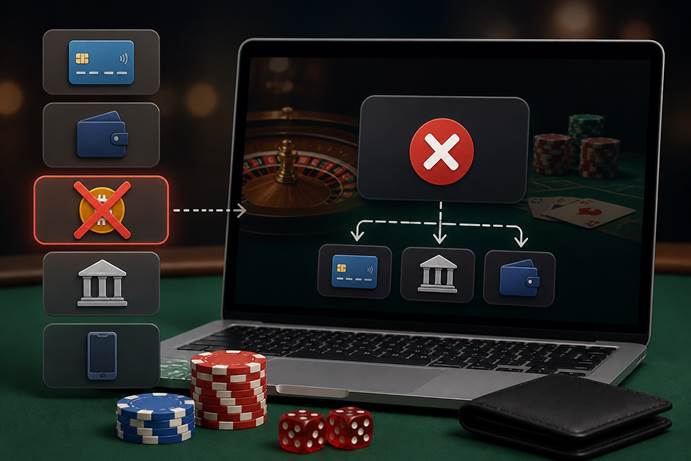
• Understanding these external pressures helps contextualize what happens when a casino payment method is no longer available, transforming potential panic into informed decision-making
• The most adaptable players treat payment options as interchangeable tools rather than fixed relationships, allowing them to pivot smoothly when necessary
• Technical complications often compound the frustration when a casino payment method is no longer available, especially if the transition involves updating stored payment details or
Long-term effects of payment method discontinuation reveal interesting patterns in player behavior and casino adaptation. Some casinos notice increased player retention when they proactively communicate payment changes and offer seamless alternatives, while others experience attrition among players who resist transitioning away from their preferred methods. What happens when a casino payment method is no longer available often depends on how transparent the communication process proves to be, with successful platforms treating payment updates as opportunities to demonstrate customer service quality rather than mere operational changes. The most resilient players incorporate payment method reviews into their regular casino maintenance routine, staying ahead of potential changes through ongoing awareness of industry shifts and platform updates. This proactive approach transforms what could be disruptive events into manageable transitions, preserving the enjoyment and continuity of the casino experience regardless of evolving financial landscapes.
How Mystery Symbols Work in Casino SlotsCasino enthusiasts often encounter a feature that sparks curiosity: the mystery symbol. For a related reference on the financial side, real money online casinos can add useful context. You might land a winning combination, only to see one of those plain symbols suddenly light up and transform into a wild, a multiplier, or even a bonus trigger. That shift rarely feels accidental because it isn’t. Behind the reels, the casino software is quietly tracking how long a mystery symbol has sat unchanged, and when the right conditions line up, it swaps in something more rewarding. If you want to see more of these moments in action, take a look at this and watch how the timing plays out across different slot titles.
The mystery symbol usually appears as a question mark, a spinning wheel, or a shaded icon that stands out from the rest. Unlike standard wilds or scatters, it doesn’t advertise what it will become until the very last second. This delay is intentional. The casino wants you watching the reels instead of checking your balance, because anticipation keeps players engaged longer. Each variant follows a simple rule set: after a set number of spins, a random trigger, or a specific reel position, the symbol reveals its hidden value.
In most cases, the mystery symbol operates through a hidden timer rather than pure chance. The casino assigns it a range, say between twenty and sixty spins, and when that window closes, the symbol activates. During those quiet rounds, the icon looks identical to every other low-paying symbol, but the software has already marked it for transformation. This design lets the casino control volatility without making the payout structure obvious to the player.
Players notice the difference immediately when a mystery symbol lands on an active payline. Instead of a fixed prize, the reels might award a random multiplier, a stack of wilds, or an instant entry to a bonus round. The casino benefits because these outcomes feel unpredictable, yet they are programmed to fit within a predetermined return-to-player percentage. The thrill comes from not knowing whether the next spin will deliver a modest boost or a game-changing payout.
| Area | What to know |
|---|---|
| Context | The mystery symbol usually appears as a question mark, a spinning wheel, or a shaded icon that stands out from the rest. |
| Consideration | In most cases, the mystery symbol operates through a hidden timer rather than pure chance. |
| Practical takeaway | Players notice the difference immediately when a mystery symbol lands on an active payline. |
The psychology behind the mystery symbol is straightforward. The casino knows that uncertainty drives engagement, so it builds suspense into every phase of the reveal. First comes the tease, then the delay, and finally the payoff. That sequence encourages players to keep spinning even after a dry patch, because the next mystery symbol might be the one that changes everything.
Hier komt de sidebar